What is Eczema in Skin of Color?
Eczema is a chronic, non-contagious skin condition that occurs due to inflammation on the skin and involves severe itch and dry, scaly rashes. Atopic dermatitis (AD) is a common type of eczema.
Eczema and AD affect people of all races and ethnicities. However, research indicates that people with skin of color are at higher risk of developing eczema. They are also at risk for more severe symptoms.

Eczema is more common in Black Americans, especially children. They may experience more itchiness and skin inflammation that require higher doses of medications to get relief.
Black Americans and Asian Americans tend to have high rates of eczema. Hispanic/Latino Americans have historically not had high rates of eczema. However, certain studies suggest the rates may be higher than previously reported. This may be due to greater numbers of Hispanic/Latino Americans accessing medical care and getting an accurate diagnosis. Data is limited for Native Americans and Alaska Natives/Pacific Islanders, but these groups are also believed to have high rates of eczema.
Current evidence shows that Black, Hispanic/Latino and Asian American children tend to develop more severe eczema than white children. Black and Hispanic/Latino children are also more likely to miss school because of eczema compared to white children.
Where do Eczema Symptoms Most Often Appear on the Body?
Eczema can appear different in people with diverse skin color and tones. In people with darker skin pigments, it may appear purple, ashen gray, or dark brown instead of red as it does on people with white skin. Depending on a person’s age, eczema can involve different parts of the body.
In early childhood, eczema often affects the scalp, forehead, and cheeks. Because babies crawl, they can also get eczema on their elbows and knees.
In young children, adolescents and teens, eczema can be located in the bends of the elbows and knees or on the wrists and ankles. It can also appear around the mouth or on the hands. Repeated rubbing or scratching can develop skin thickening.
Many adults have had eczema since childhood. Some people can develop eczema for the first time as an adult. Eczema-prone areas in adults include the neck, chest, hands, feet or eyelids. About 70% of people with eczema report a family history of the condition.
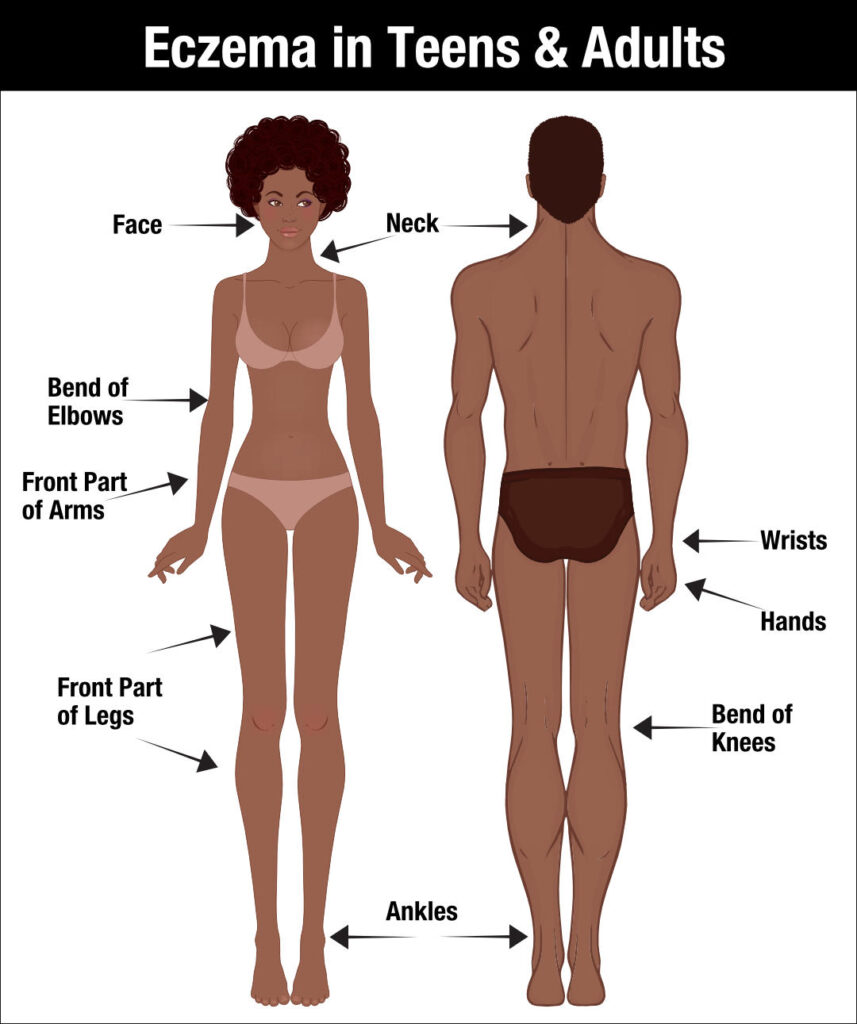
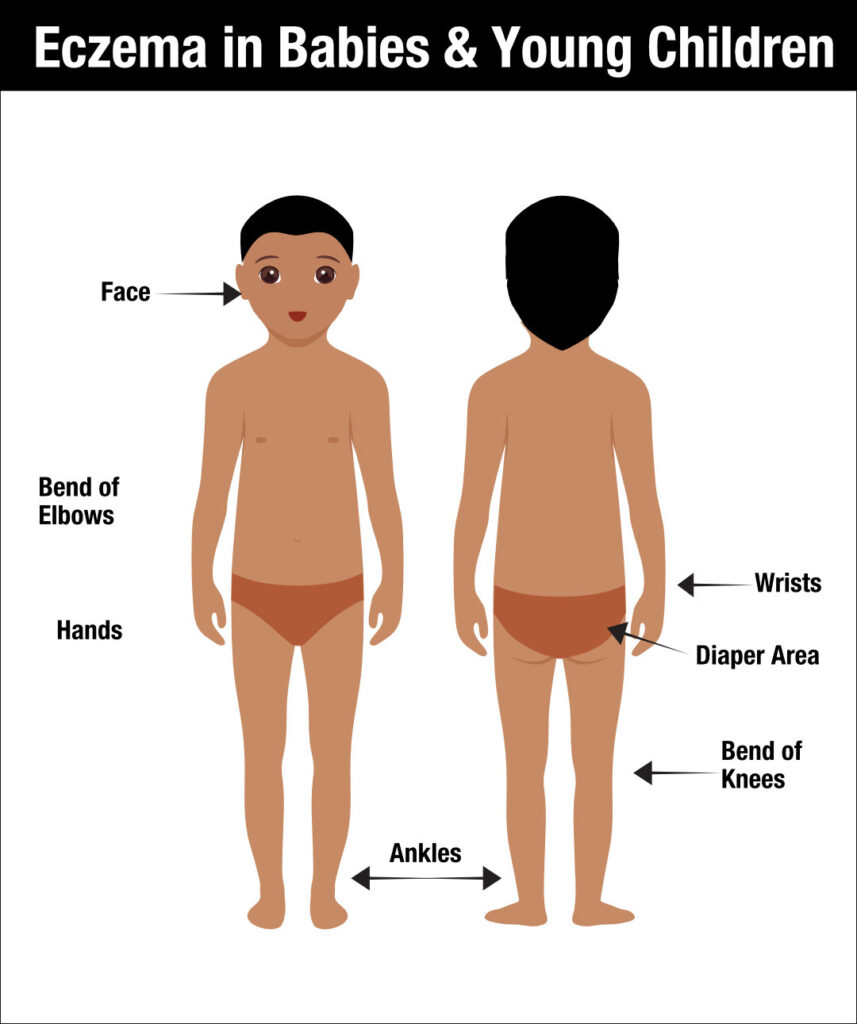
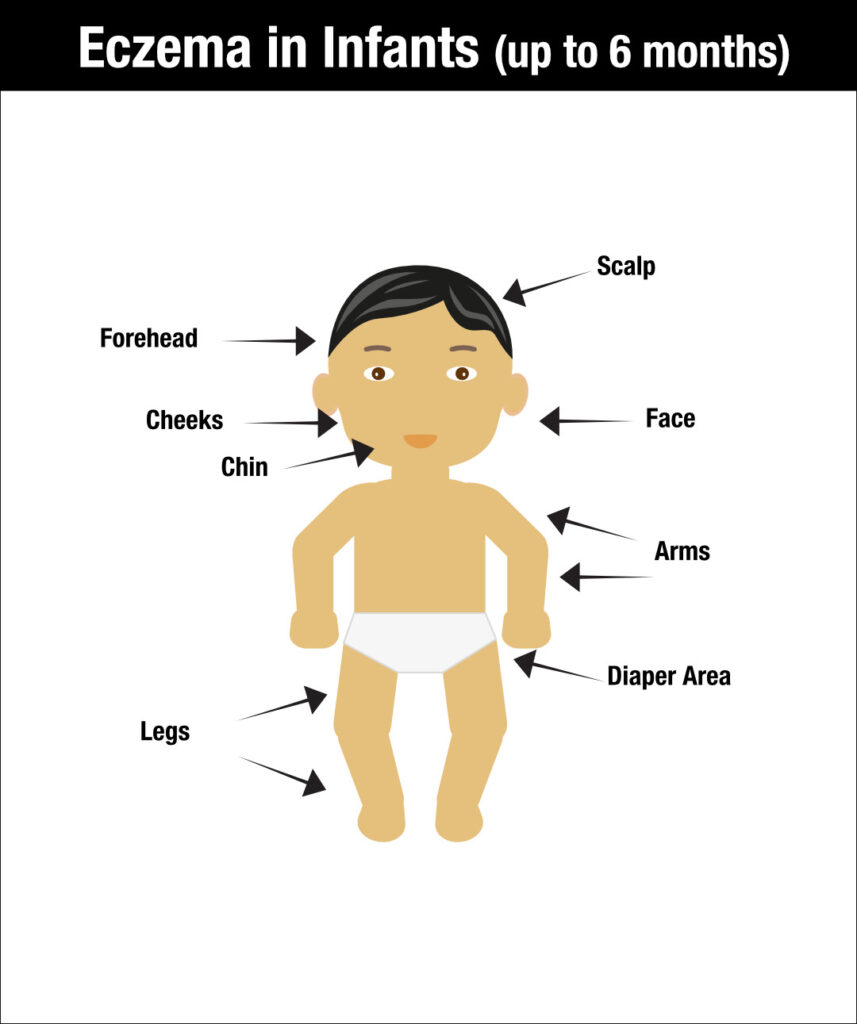
Eczema Symptoms on Darker Skin Tones
Atopic dermatitis (sometimes called atopic eczema) is the most common form of eczema. Symptoms include:
- Itchy rash and red patches on lighter skin tones
- Itchy rash and dark brown, purple, or ashen gray patches on darker skin tones
- Dry skin
- Scaly skin
- Open, oozing, crusty sores, which could lead to infection
- Thickened skin (called lichenification)
- Skin that feels warm when touched
- Papular eczema: small, raised bumps on the skin that resemble goosebumps (called papules), also found near the hair follicles
Associated eczema symptoms may also include dark circles under the eyes. This is not due to tiredness or a lack of sleep. In people with skin of color, it could be eczema-related darkening of the skin called hyperpigmentation.
Non-physical atopic dermatitis symptoms
Eczema does not just affect how a person’s skin looks. It can also make people feel tired, depressed or anxious because of constant itching, poor sleep, changes in appearance, and feeling judged by others. These emotional symptoms can have a negative impact on quality of life and may lead to mental health problems.
Eczema can become a severe disease if left untreated. Long-term rubbing or chronic scratching and skin swelling can progress to skin thickening, discoloration, or scarring. Open or oozing skin is more likely to get infected, which can lead to serious issues and even hospital stay.
Types of Eczema in Black Skin and Brown Skin
There are many distinct types of eczema, each with different triggers and symptoms. However, they all share a few common traits. These include itching, skin irritation, and changes in skin texture (often becoming dry or scaly over time).
- Atopic dermatitis (AD): The most common type of eczema, AD is often linked to an impaired skin barrier and overactive immune system. It causes dry, itchy patches that can become red on white skin tones and purple or gray patches on black skin or dark brown skin. The skin sometimes oozes or crusts over. AD is most common in children, but it can appear at any age.
- Contact dermatitis: This can happen when an irritant (like harsh chemicals or fragrances) or an allergen (such as metals) comes into contact with skin. It can cause redness or skin darkening, itching, burning, or blisters.
- Dyshidrotic eczema: This condition shows up as small, itchy blisters on the palms of your hands or the soles of your feet. Stress and sweating can make it worse.
- Neurodermatitis: Symptoms often begin with an itchy patch, usually on the arms, legs, or back of the neck. It becomes worse if you keep scratching. Stress can be a common trigger.
- Nummular eczema: This type appears as round or coin-shaped spots on the skin. Symptoms tend to be very itchy or ooze fluid. These patches sometimes develop after other forms of eczema or when certain triggers cause flare-ups.
- Seborrheic dermatitis: Symptoms include flaky, scaly patches in oily areas like the scalp, eyebrows, and sides of the nose. On the scalp, it’s commonly referred to as dandruff.
- Stasis dermatitis: This usually affects the lower legs when blood doesn’t flow well in that area. It can cause swelling, itching, and sores that are slow to heal.
Eczema can differ in severity and change over time. Moderate eczema often begins when itchy patches spread. Then the itching becomes so strong that it disrupts sleep, work or daily activities.
People with darker skin types are more likely to have moderate to severe atopic dermatitis. This is due in part to doctors not diagnosing it quickly enough. People with darker skin types are also less likely to have easy access to proper care.ion, or scarring. Open or oozing skin is more likely to get infected, which can lead to serious issues and even hospital stay.

What are Common Triggers of Eczema?
- Skin irritants and allergens in personal care products, such as soaps, shampoos, detergents, cosmetics or fragrances
- Heavy or tight clothing can cause issues due to rubbing
- Nickel, which can be found in jewelry or on clothes such as buttons and zippers
- Environmental allergens such as pollen and mold
- Food allergens (may worsen symptoms for people with moderate to severe eczema)
- Hot and humid temperatures
- Cold air in winter, which can dry out the skin
- Viral and bacterial infections
- Antibacterial ointments such as neomycin and bacitracin
- Tobacco smoke
- Stress
The Itch-Scratch Cycle

Eczema causes intense itching, accompanied by a strong urge to scratch. Doctors now know that scratching skin affected by eczema makes the itch last longer. It also worsens symptoms. This creates an “itch-scratch cycle” that is hard to stop.
The cycle begins because when you scratch. The outer layer of the skin breaks down, letting allergens, irritants, and bacteria get in. The immune system then sends signals to the skin’s surface, causing more swelling and itching. The cycle begins again with more scratching.
The constant scratching raises the risk of skin infection and, on darker skin, potentially more scarring.
When skin is injured by constant scratching, melanin is released. This can result in hyperpigmentation, especially in people with black or brown skin.
The itch-scratch cycle can affect quality of life, increase stress, and impact sleep, especially in children.
It is vital that physicians and patients recognize eczema symptoms in skin of color and understand how social and economic factors can impact management and treatment.
70% of people with eczema report a family history of the condition
See Our Image Library for detailed photos of Eczema in Skin of Color
Recognizing Eczema in Skin of Color
It is very important for healthcare providers and patients to understand how eczema can look different on people with darker skin pigments. When there is a delay in diagnosis and treatment, it can lead to more severe and long-lasting symptoms. In addition, social and economic factors can affect eczema care.
For more information on “What is Atopic Dermatitis?”